Traceability is the ability to track a product’s journey from its origin (raw materials) to its final destination (the consumer), and back again. In 2026, traceability has shifted from being a "safety feature" to a strict regulatory mandate, driven by digital transformation and new food safety laws.
For manufacturers and exporters, traceability is defined by two key concepts: Critical Tracking Events (CTEs) (the "where and when") and Key Data Elements (KDEs) (the "who and what").
1. Directional Traceability
To be fully compliant, your system must operate in two directions:
-
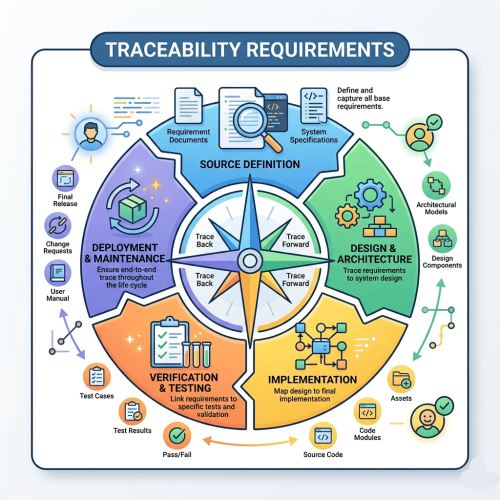
Forward Traceability (Downstream): Tracking a specific batch from your facility to the customer. This is essential for Recalls, as it allows you to pinpoint exactly which retailers or distributors received a compromised product.
-
Backward Traceability (Upstream): Starting with a finished product and tracing it back to the specific supplier of raw materials. This is used for Root Cause Analysis to find where a defect or contamination originated.
2. Global Regulatory Mandates (2026)
Different markets have specific requirements that impact how you label and document your goods.
A. The FDA "Food Traceability Rule" (FSMA 204)
As of early 2026, the FDA has intensified enforcement for items on the Food Traceability List (FTL) (e.g., leafy greens, seafood, soft cheeses, and nut butters).
-
24-Hour Rule: You must be able to provide the FDA with an electronic sortable spreadsheet of traceability data within 24 hours of a request.
-
Unique Traceability Lot Codes (TLC): Every "Transformation" event (like mixing ingredients or packaging) requires a new, unique lot code that must follow the product through the rest of the chain.
B. India: The TRACE Initiative (2026)
The Directorate General of Foreign Trade (DGFT) has introduced the TRACE (Technology-based Record for Audit and Compliance for Exporters) guidelines.
-
MSME Support: The Indian government now provides financial assistance (up to ₹25 lakh) to help MSMEs implement digital traceability systems to meet international standards.
-
Digital Export Authorization: For certain "prohibited" or "restricted" items (like wheat or specialty grains), exports are only permitted if the batch can be traced back to the farm level using an approved digital portal.
3. Technology & Record Keeping
Manual binders are no longer sufficient for modern audits. The industry has moved toward automated data capture.
-
Barcodes & QR Codes: Each unit or pallet carries a scanable code containing the batch number, manufacture date, and expiration.
-
ERP Integration: Traceability data is now baked into Enterprise Resource Planning (ERP) systems so that an invoice (in ₹ or local currency) is automatically linked to the production logs.
-
Blockchain: Used for high-value exports (like organic food or luxury goods) to create an immutable ledger. This prevents "data tampering" and provides proof of provenance to skeptical international buyers.

krishna
Krishna is an experienced B2B blogger specializing in creating insightful and engaging content for businesses. With a keen understanding of industry trends and a talent for translating complex concepts into relatable narratives, Krishna helps companies build their brand, connect with their audience, and drive growth through compelling storytelling and strategic communication.